
Do you remember that scene at the beginning of Alice in Wonderland, the 1951 animated version, when Alice falls asleep in a meadow of daises?
Her tiny kitten is running around through the daisy stems and stops to peer through the white petals above, the sun shining through.
“I remember as a kid watching this scene and then crying because it was over. I made my friends rewind the video again and again because I wanted to keep hearing Alice sing about making a home amongst the flowers,” Ashlee Wheelhouse said.
“I love the idea of being enveloped by nature.
“Now I love creating a whole room experience with overgrown and hanging flowers and plants with my designs and installations.”
Skipping forward to sometime in the late 2000s at the University of Wollongong. Rachael Cullen is sitting in one of her classes for a Bachelor of Fine Arts, taking in every word about artists like Andy Goldsworthy.
“I loved studying artists that used botanical and natural forms for an artwork and then draw from them as they decayed over time,” she said.
It’s something that is beautiful and not around forever, so you have to appreciate it while it’s there.
Ash and Rach are both Newcastle-based florists who are great friends, each other’s professional confidants and together shaking up Australian floristry.
However, they both have differing experiences, goals and opinions regarding the industry.
Ash and Rach shared their insight as florists in Newcastle, how social media changed the industry and their mission to make sustainable floristry widespread in the second edition of The Everyday Project: Newcastle.
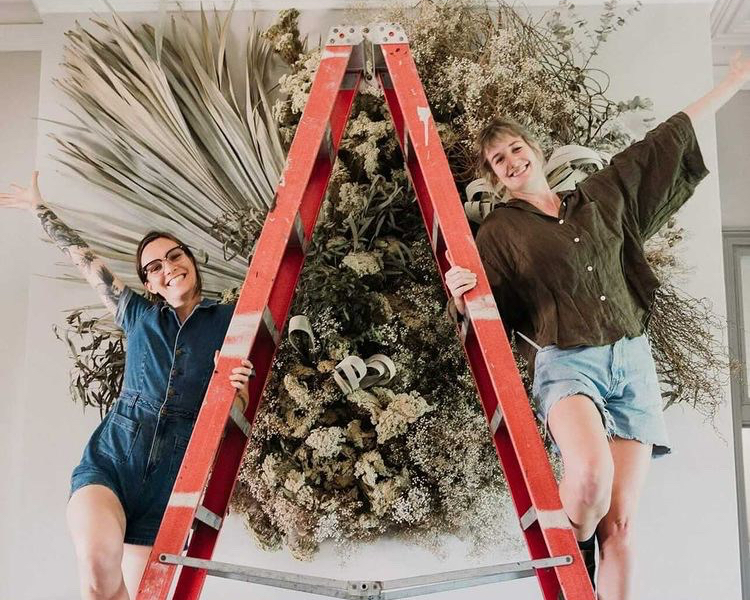
Sharing secrets: The Newcastle floristry scene
Technically Ash and Rach are competitors, right?
In one corner we have Ash, founder of Film & Foliage, a style that’s described as wild, textured and organic while featuring a more muted colour palate.
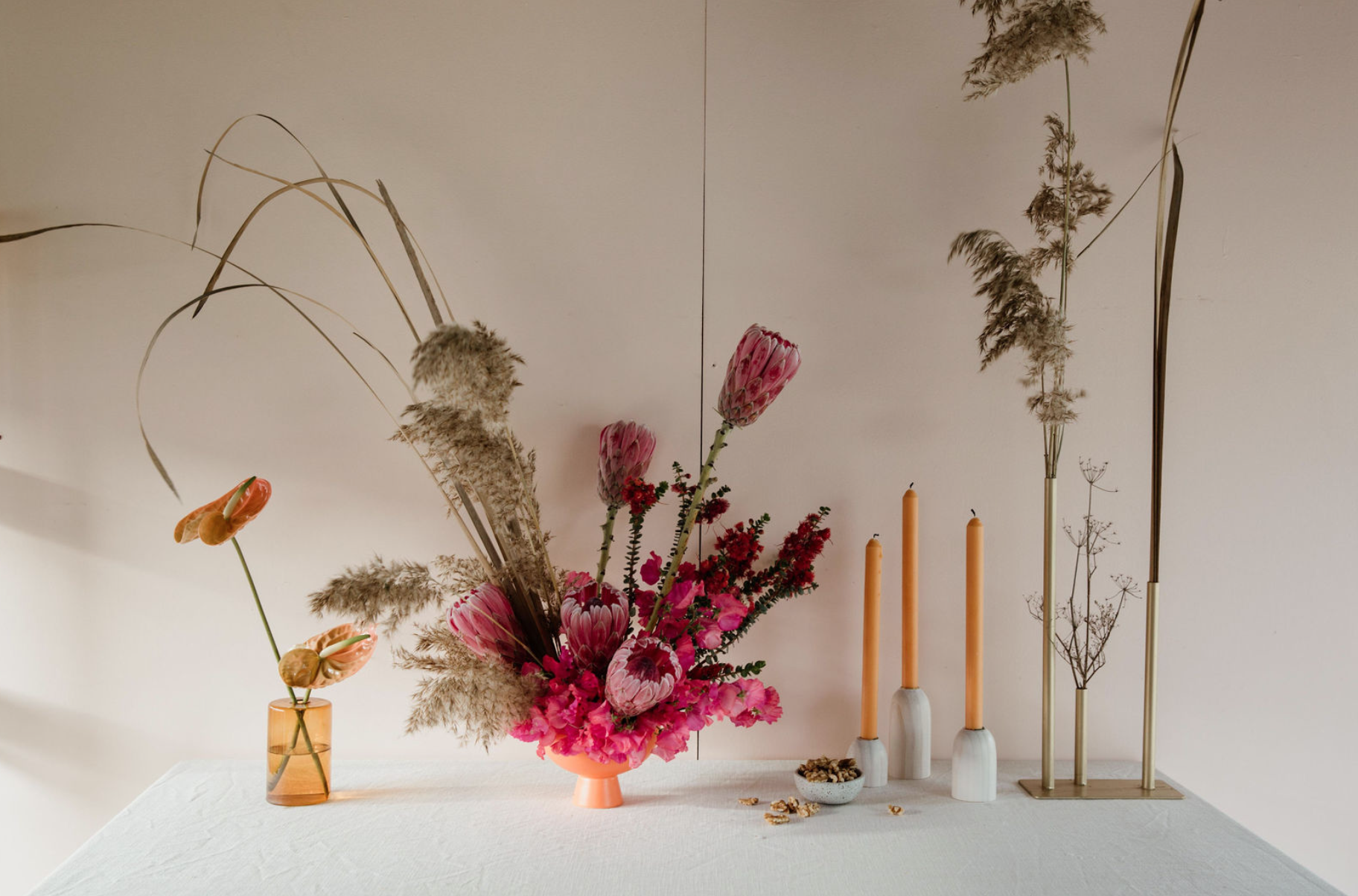
Annnddd in the other corner we have Rach, founder of Botanica Bird and is someone who favours bold colours, shapes and juxtaposing floral combinations.
But if you follow both Ash and Rach on social media, you will see that this whole competitor narrative is completely made up.
The truth is that they don’t hold back in the slightest when sharing information about their practices and business.
They both run a platform that educates and entertain their audience, which consists of clients, fellow florists, and us regular Joanne’s who love pretty flowers on our feeds.
At the end of the day everyone runs a business, and we know that it can be the worst feeling in the world if it fails. You want everyone to succeed, regardless if they are your competitors.
Rach


Rach felt like her experience studying floristry at Sydney TAFE and her first freelance gigs were very open and encouraged experimentation with new trends.
Whereas Ash had a completely different experience.
“The course at Kurri Kurri TAFE was very traditional, and it didn’t align with the wild and natural designs I was interested in learning about.
“For my last assessment we had to make a wedding bouquet which I was really proud of, but my teacher tore it apart. I walked out of the class and threw it in the bin. I remember hearing the class gasp as I did it,” Ash laughed.
This rigid theme continued when she entered the workforce running the floristry department of a wedding styling company.
“I was working for older florists who were averse to sharing information. I thought that it was an unwritten rule that we don’t talk to other florists.
“When I started meeting younger florists like Rach, who were not at all hesitant to share information with me, I began to open up as well.”
According to both Ash and Rach, “our generation has shaken things up” and they both agree that social media had a significant role to play.
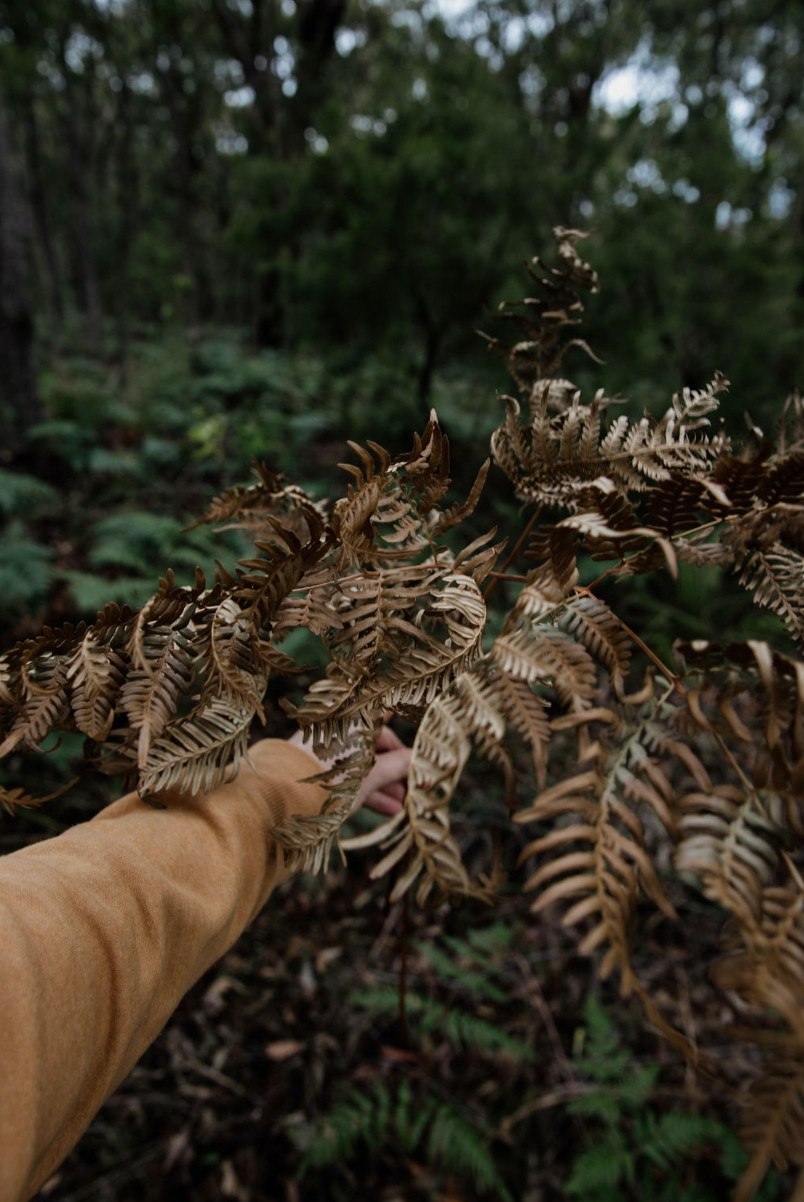
Before we go on, we are taking a break to witness the magic in action. Look at these two foraging for flowers and foliage to create these stunning bouquets!



The social (media) dilemma
“If it wasn’t for social media, particularly Instagram, I wouldn’t be where I am today,” Rach said
While working at a call centre Rach would doodle on her notepad while on the phone.
“I was drawing flowers and botanicals then posting them on my personal Instagram account and that’s the beginnings of Botanica Bird.”
As we know from our weekly screen time reminders, social media can be taxing and at the same time something we can’t escape.
“Social media is a full-time job,” Rach said.
“I am a small business, that means we are everything – the creators, admin, marketing, accounting – and adding social media on top of that is a huge job.”
Ash interjected saying she has a completely different perspective.
“I find it all really fascinating and super educational. To me, it’s just another part of my job that I do along with responding to emails, for example.”
The conversation trails off down a dystopian tangent about the Netflix documentary ‘The Social Dilemma’ and how we are merely ‘products’ to the social media giants. It got dark.
“But on the other hand,” Ash said attempting to pull the metaphorical blindfold back over our eyes, “I found that 90% of my enquiries come from Instagram – it’s free marketing and I’m still going to take advantage of it.”
Fair enough.
Continuing down the path of positivity, social media has become an educational tool, connecting florists around the world to get the sustainable floristry movement off the ground – Search #nofloralfoam on Instagram for examples!
Using social media as a tool to educate themselves, Ash and Rach are now leaders in this space, using their platform to promote an environmental ethos and encouraging others to do the same.
“Together, we’re shaking up the industry”
“The industry needs to be shaken up because social media trends have gone from 0 to 100 and people aren’t realising the toll it takes on the environment,” Rach said.
At this point of the conversation Rach’s voice takes a firm tone, her posture straightens, and her words gain conviction.
“We don’t have to focus on overseas trends that require massive amounts of imported flowers. You can have epic flowers and amazing installations by embracing flowers that are grown in our own soil.
Flowers are temporary. You’re satisfied for five minutes and the environment pays the price.
ash
Okay, here are some of the facts:
- More than half of Australia’s flowers come from countries like Kenya, Ecuador and Columbia. Think about the carbon footprint of getting them to Australia.
- This poses a huge biosecurity risk and pushed smaller local growers from the industry.
- To stop the risk of introducing foreign pests into the country, the imported flowers are quarantined and doused with chemicals.
Can you imagine what we are inhaling when sticking our noses in the flowers out the front of the supermarket? No thanks.
“When we first came into the industry, we weren’t educated about this stuff either, so we can relate to people using the ‘traditional’ techniques and imported flowers,” Ash said.
“But I think it’s important when sharing information not to be judgemental but to show what else can be done in a sustainable way. Like working with the seasons and using chicken wire instead of floral foam.”

Dreams
Imagine if you had every possible resource at your fingertips, what would you do? How big would you dream?
When this question was posed to the girls, again, their answers were miles apart. Don’t worry, it still involves many, many flowers!
Ash said that one of her “biggest goals is to do flowers for a Fashion Week catwalk.”
“I love fashion and flowers. I love editorial work and styling photoshoots… Oh, and I love epic activations!”
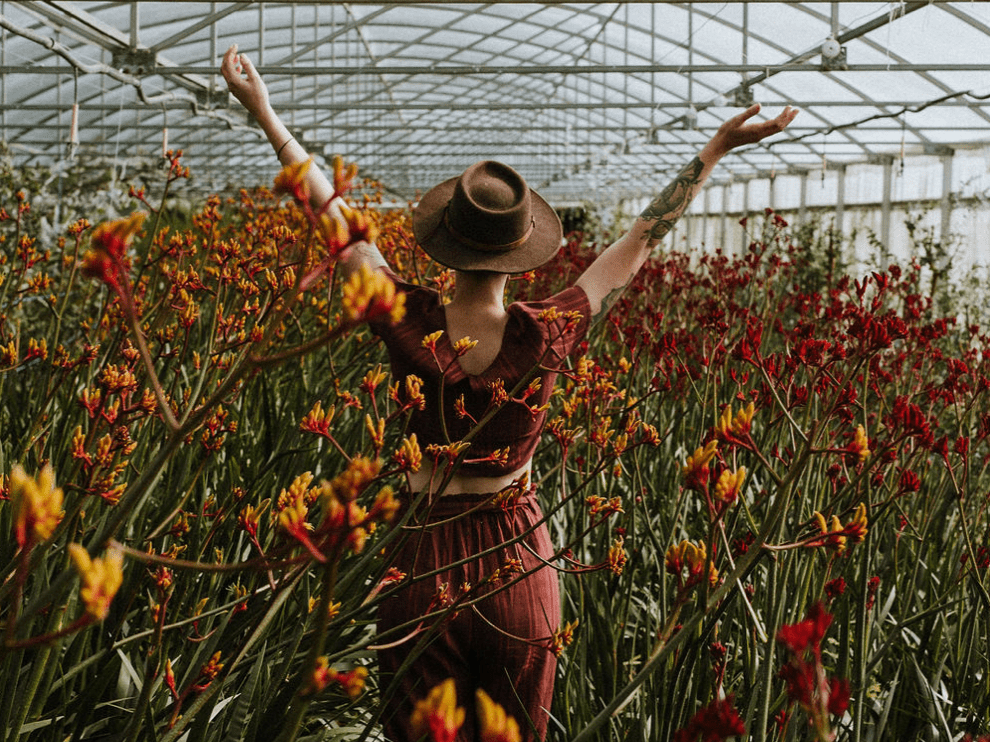
While Rach said that all she’d need is a big greenhouse, a chicken pen and a flower studio.
“I will always be a country girl… Just give me a bloody paddock and I’ll be stoked,” she laughed.
At the end of the day, they agreed that they both want to be a part of the education of future florists, whether that be on a grand scale or bringing it to people’s homes.
“The goal is to celebrate. Celebrate flowers, the special occasions and our community.”
You can keep up to date with all of Ash & Rach’s work and incredible contributions to the Newcastle Community on their website or Instagram pages.
 the-everyday-project.com